
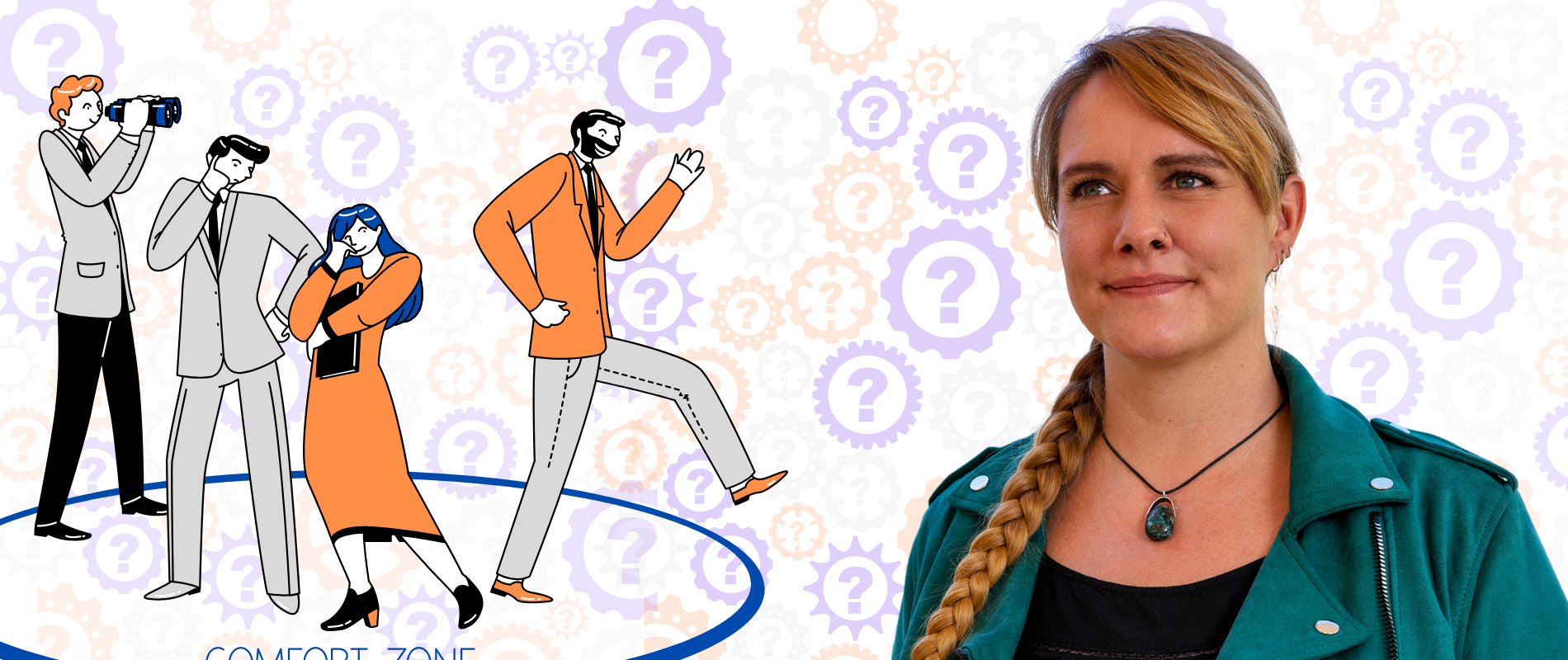
Change creates opportunities
Every time we step out of what is familiar to us, what we have already explored, in which we move with certainty, new possibilities emerge. New things cannot arise if we mix the same ingredients over and over again. As soon as we take a step outside our comfort zone, engage with the new, we create space for the new and thus for further development, growth, and new discoveries. Actually quite brilliant, so why isn't it as easy as we sometimes wish it were?What changes makes our world tremble
The longer we've made ourselves comfortable, the harder it is to get up and take a step out of this comfort zone. And that's quite clear, because who knows if it will be as cozy and pleasant again when we settle back in? A change always also means a risk.farewell. It means letting go of a piece of security and predictability and inviting the unknown into life. Furthermore, what has been is called into question: wasn't it perhaps not optimal? Could I have done something differently or better? And last but not least, a change also means making a decision. And this is especially true for the first steps we take in a new direction. Every step means parting with at least one alternative possibility (e.g., staying put 😉).When Changes Are Difficult for Us
Change opens up opportunities while simultaneously shaking our world. If these remain in balance or ideally tip more in favor of new opportunities, then change comes easily. However, if the scales are perceived to tip towards disadvantage, then change can be incredibly difficult for us. For example, when change is initiated externally and we haven't made the decision ourselves. Or when we have such a great need to preserve the familiar that every step away from it strains us and demands a lot. Or also, when a change not only on ourselves but also on other people. Or, or, or... You've probably already thought of several examples of changes in your life that didn't feel so easy.
Humans can learn change.
And I have good news for you: what changes do to you is not a law of nature! You have it in your hands and can influence it. It's like training a muscle. If you understand what is happening within you when changes occur, you can find YOUR OWN WAY to deal with change. You can consciously react to and act within changes, and discover where to get security so that the scales don't easily tip in the direction of disadvantage.
This succeeds if you...
- ... you understand which of your basic needs are triggered when something changes
- ...you find out what gives you security
- ... which advantages are relevant to you in changes
- ... you can consciously perceive which of your experiences are being activated.


The way you give advice and tips for dealing with change is extremely helpful. It shows that while change can be difficult, it also offers opportunities for personal growth and development.
Thank you for sharing your knowledge and wisdom with us. Your blog is a source of inspiration for everyone dealing with change and looking for ways to master it.
Best regards,
Bianca
Dear Bianca,
Thank you very much for your comment 🙂 I'm very happy that my blog inspires you!
What effects of changes are you currently concerned with?
Kindest regards,
Lorena