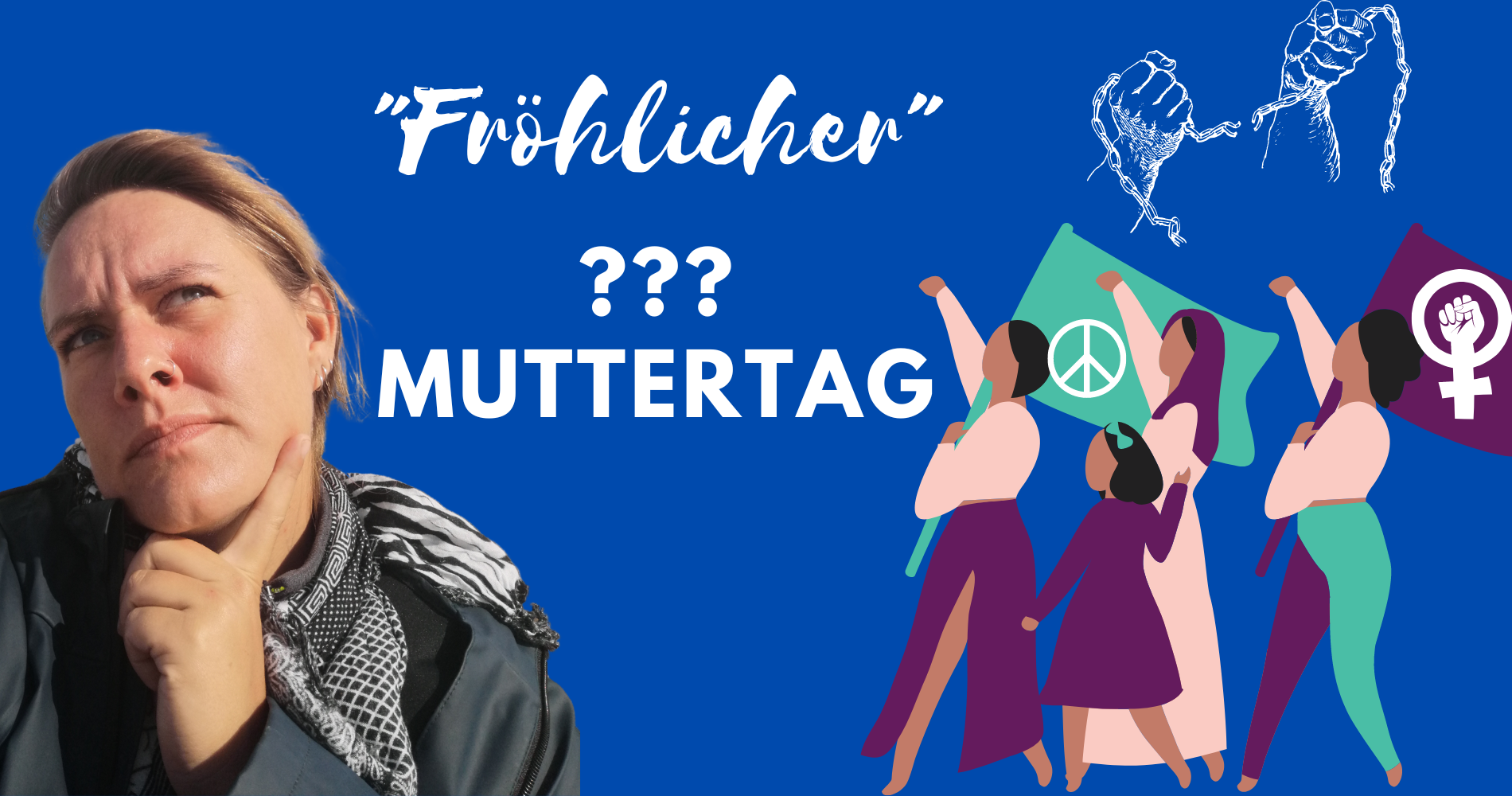
Happy Mother's Day! Or… is it? What's really behind it? Inspired by a
Articles from Moment Magazine of 5/6/2022 I've researched the background of Mother's Day a bit and would like to share the original meaning with you. Because originally, it wasn't about flowers, greeting cards, chocolate, and other gifts for one's own mother. Originally, it was about women's rights, solidarity, education, and peace. The impetus for this came from movements initiated by two women in the USA, specifically in the northern half of the Atlantic coast (from Virginia to Rhode Island):
Julia Ward Howe and
Ann Maria Reeves Jarvis.Although today provides an occasion for families to see each other and exchange gifts, the original idea has been lost. With this blog post, I want to remind you of the origin of the meaning of this day.
Julia Ward Howe: Against War and Slavery - For Peace and Women's Rights
Julia Ward Howe was born in New York in 1819 and was a leader in the women's rights movement of the USA at that time. She was an opponent of slavery and advocated for women's suffrage and peace. During the American Civil War, she launched the „Mother's Peace Day Initiative“ with the aim that sons and husbands would no longer be sacrificed in war. In 1870, she published her „Mother's Day Proclamation,“ a call for the introduction of a Mother's Day as a day of protest against war. Here is an excerpt from it:
„We will not allow our sons to be taken from us to be trained to forget all we have taught them of mercy, of pity, of compassion. We women of one country will be too tender of those of another country to allow our sons to be trained for the purpose of inflicting injury on the sons of other countries. From the bosom of the devastated earth a moan rises, and it mingles with ours. “Lay down your arms, lay down your arms!" The sword is not the measure of justice. Neither blood restores lost honor, nor is violence a sign of possession. [...] In the name of all women and all people, I call for a general assembly of women, regardless of their nationality, to be convened. [...] There, let an alliance of the various peoples, the consensual resolution of disputes between states, and the great and general cause of peace be advanced."
Ann Maria Reeves Jarvis: Reducing child mortality and unsanitary conditions, promoting health and peace
Ann was born in 1832. In 1858, she founded the „Mothers Days Work Clubs“ out of a social, solidarity-based community spirit: child mortality and poor hygiene were to be reduced, and the health of all people promoted. Women came together to show others how children could grow up healthy and how to best care for them (increasing mothers' health literacy). Additionally, at a time when tuberculosis was widespread, the clubs collected donations for medicine and household help to support families when a mother fell ill with tuberculosis.
When the Civil War broke out, the club adopted a neutral stance and provided care for wounded soldiers on both sides. After the war ended, Ann organized the so-called Mother's Friendship Days. On these days, mothers and former soldiers from all sides exchanged ideas with the aim of supporting reconciliation, promoting peace, and preventing renewed violence.
The recognition of Mother's Day as an official, federal holiday in the USA
After Ann died in 1905, her daughter organized a day of remembrance and later advocated for its official recognition as a public holiday, which was finally achieved in 1914. Originally, this day was intended to commemorate her mother and her peace and social movement. However, relatively quickly after being designated a public holiday, the original intention of the remembrance day was lost. Instead of highlighting peace, women's rights, education, and solidarity, the new holiday became economically commercialized.
Mother's Day in German-speaking countries: Between flowers and Nazi propaganda
Mother's Day is celebrated on different days in different countries. However, in Germany, Austria, Liechtenstein, and Switzerland, Mother's Day is observed on the original date of the public holiday in the USA: the second Sunday in May.
In Germany, Mother's Day was „imported“ in the early 1920s by the Association of German Florists as a day to honor mothers and as a day for flower wishes. Around the same time, Mother's Day also came to Austria, driven by
Marianne Hainisch, Marianne Hainisch is considered a pioneer of the Austrian women's movement, who established Mother's Day in connection with the scouting movement as its honorary president.
However, Mother's Day was only officially established as a public holiday during the Nazi era. The positive image of the day was adopted by the Nazis as a propaganda tool. They declared it an official holiday as the „Day of Remembrance and Honor for German Mothers.“ In 1938, they also introduced the so-called "Mutterkreuz" (Mother's Cross). On Mother's Day, mothers with many children, in particular, were honored as heroines of the people. After the war ended, this holiday was abolished again as a state holiday.
What Mother's Day means to me
I too have always taken Mother's Day (among other days) as an opportunity to make my mom happy. Likewise, Father's Day to make my dad happy. As children, we also made things for these occasions in kindergarten or school. For me, at least until very recently, it was simply one of the days of the year, like so many other days dedicated to something.
Now that I've looked more closely at the meaning and understand the political significance – especially the role in the women's rights and peace movement – I wonder why I never learned about this background? Why didn't we learn this in school classes? Why has the day become a day for buying flowers?
In any case, I will think about how to celebrate this day in its original meaning in the future and thus celebrate its founders and all the women's rights advocates. Because they are the reason why I, as a woman in Europe today, enjoy the freedoms I have. And that includes my mom. Because she too took to the streets in the past, against the Vietnam War, against nuclear power, against mandatory military service, and much more. Thank you for that, all you strong women, even if we rarely hear your stories in school lessons. Let's continue to take to the streets for peace, freedom, and women's rights.


Dear Lorena,
Thank you for this exciting and educational article!
I think it's a great idea to remember on Mother's Day why or what was originally celebrated on this day.
Best regards!
Dear Frauke,
It is very interesting to deal with where certain customs or turns of phrase come from. I enjoy doing that quite a bit.
I think it holds great potential if we become more aware of our language use and the meaning of our actions.
Best regards,
Lorena